Why Garbage Truck Accident Claims Need Fast Action?
Garbage truck accident claims require prompt action because critical evidence, including surveillance footage, witness statements, and vehicle data, may be lost or overwritten. Acting quickly helps preserve essential evidence, identify all potentially liable parties, document your injuries, and protect your right to seek compensation.
At Uptown Injury Law, PLLC, we understand the challenges of holding negligent drivers and waste management companies accountable. Our legal team provides 24/7 assistance to help investigate the accident, review police reports, interview witnesses, and preserve available footage and vehicle data. We also examine driver records, maintenance logs, and company safety practices to help establish liability. Call 917-540-8728 today to discuss your case and pursue the compensation you deserve.
Why Do Garbage Truck Accident Claims Require Prompt Action?
Accidents involving garbage trucks require prompt action because these vehicles use GPS, telematics, black boxes, and onboard cameras to record speed, braking, and driver behavior. This data can help explain how the crash occurred and establish fault. However, garbage truck companies may overwrite or delete it unless lawyers act quickly to preserve the evidence.
The same urgency applies to maintenance records, route logs, and repair files, which are often controlled by the waste management company. If these records are lost or altered, proving negligence can become more difficult. Moreover, insurance companies may send adjusters and investigators to assess the crash and limit their financial liability. Preserving independent evidence early helps you build your claim on documented facts rather than relying solely on the insurer’s statements.
Legal deadlines make prompt action even more important when a government vehicle is involved. For example, if your accident involves the NYC Department of Sanitation (DSNY), you generally have 90 days from the incident to file a Notice of Claim. Missing this deadline can jeopardize your right to pursue compensation.
What Evidence Should You Preserve After a Truck Accident?
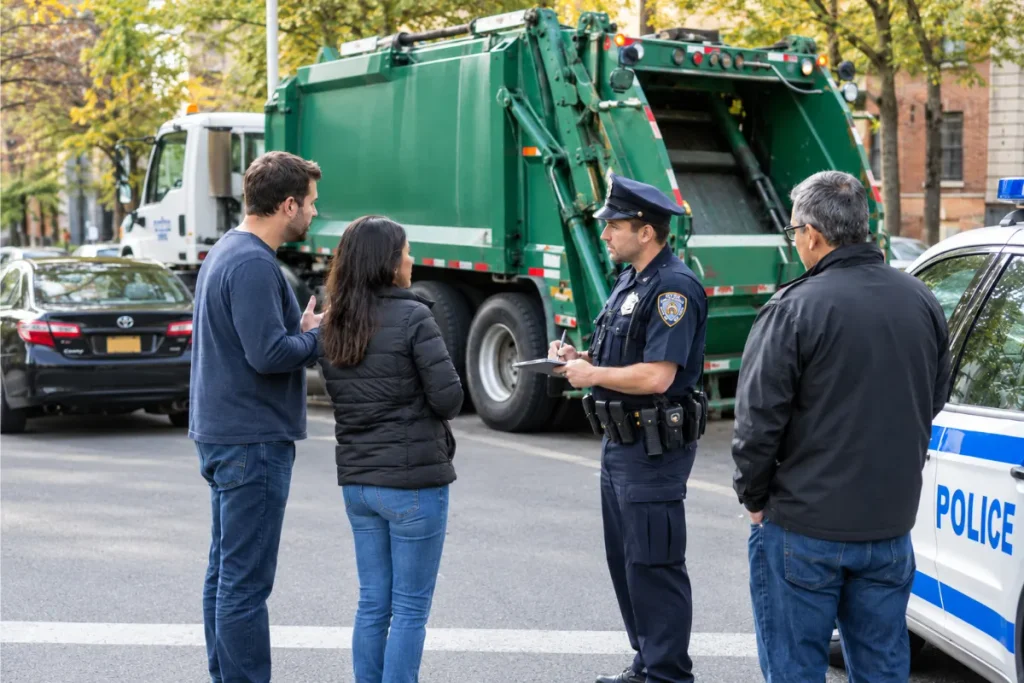
After a truck accident, preserve photographs and videos of the crash scene, vehicle damage, road conditions, and visible injuries. Keep the police report, witness contact details, medical records, repair estimates, and insurance correspondence. In commercial truck cases, electronic logging data, dashcam footage, driver records, and maintenance reports may also help establish fault and support your claim.
Here’s how this evidence can help show how the crash occurred:
1. Photographs and Videos of the Accident Scene
Photographs and videos can help document how a truck accident occurred and the conditions surrounding the collision. If you can safely do so, photograph the positions of the vehicles, damaged areas, skid marks, road debris, traffic signals, road signs, weather, lighting, and any visible injuries, such as broken bones.
Moreover, take wide-angle photographs of the overall scene and close-up images of specific damage. Preserve original files with their timestamps and metadata when available. This evidence may help accident investigators reconstruct the accident and compare the physical damage with statements from the drivers and witnesses.
2. Police Accident Report
The police accident report provides important details about the crash, including the date, time, and location. It also includes driver or vehicle information, witness details, observations made by responding officers, and any citations issued.
Obtain a copy of the report from the New York State Department of Motor Vehicles or keep the incident number so you can request it later. Once you receive the report, review it for factual errors and discuss any concerns with your garbage truck accident lawyer.
3. Witness Names and Contact Information
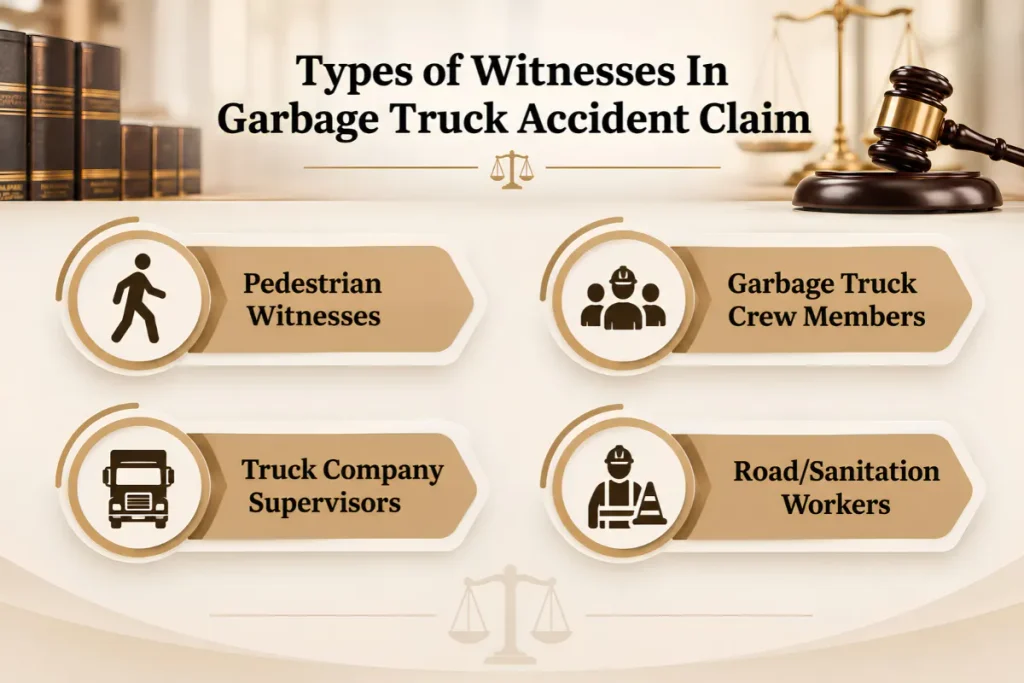
Witnesses can provide valuable information about what happened immediately before, during, and after your garbage truck accident. If they are willing to share their details, record their names, phone numbers, email addresses, and a brief description of what they observed.
For example, a witness may have seen the truck change lanes, run a red light, follow your vehicle too closely, or travel at an unsafe speed. These accounts can help investigators compare different versions of the collision and determine how it occurred. However, avoid coaching witnesses or pressuring them to make statements that support your claim.
4. Medical Records and Injury Documentation
Your medical records help connect your injuries to the garbage truck accident and document the treatment you receive. Such accidents can cause serious injuries, including spinal cord injuries, as well as emotional distress. Therefore, keep your emergency department records, diagnostic imaging reports, physician evaluations, prescriptions, physical therapy notes, and discharge instructions.
You should also follow your healthcare provider’s treatment recommendations and report new or worsening symptoms. Consistent medical documentation may help prove lost earning capacity and your future medical expenses. Additionally, keep copies of medical bills and records of travel expenses related to treatment, as these may help document accident-related financial losses.
5. Vehicle Damage and Repair Estimates
Preserve photographs of the truck, your vehicle, and any other damaged property before repairs begin. Keep towing receipts, storage charges, repair estimates, invoices, and insurance inspection reports. If your vehicle is declared a total loss, retain the insurer’s valuation and settlement documents.
Vehicle damage can help accident reconstruction experts assess the point of impact and the forces involved in the collision. If a mechanical failure has contributed to the crash, ask your attorney whether the vehicle should be inspected before repairs or disposal.
6. Insurance Correspondence and Claim Documents
Save all communications with your insurance company, the trucking company’s insurer, the truck owner, and any claims representatives. These may include claim numbers, coverage letters, recorded-statement requests, settlement offers, payment decisions, emails, text messages, and letters explaining a denial.
Maintain a dated record of phone conversations, including the representative’s name and the main points discussed. These documents can help establish what you reported, what the insurer requested, and how it handled the claim. Before signing a release or accepting a settlement, make sure you understand how it could affect your ability to seek further compensation
7. Electronic Logging Data and Truck Records
Commercial trucks may generate electronic records that help investigators understand the driver’s activities and the vehicle’s movements before a collision. Depending on the equipment, relevant evidence may include electronic logging device (ELD) records, GPS data, telematics data, dispatch records, and event data recorder data.
These records may help establish driving hours, travel patterns, vehicle speed, or other relevant circumstances. However, the information available depends on the vehicle and system, as not every device records the same data.
8. Truck Dashcam and Surveillance Footage
Dashcam footage may show the truck driver’s actions, traffic conditions, lane changes, braking, and the moments leading up to the collision. Footage from nearby businesses, traffic cameras, parking facilities, or other vehicles may also provide an independent view of the crash.
Because some surveillance systems automatically overwrite older recordings, identify potential camera locations as soon as possible. Your attorney can help request the preservation of relevant footage and obtain copies through appropriate legal channels.
9. Driver Qualification and Employment Records
A trucking company’s driver qualification file may contain information about the driver’s licensing, driving history, qualifications, training, and other employment-related requirements. Depending on your accident, dispatch instructions, work schedules, and relevant safety records may also help investigators determine whether the driver or employer failed to meet applicable obligations.
For example, these records may help establish whether inadequate training, unsafe scheduling, or other potential safety violations contributed to your accident. Reviewing them alongside the available crash evidence can help identify whether the driver’s actions or the company’s practices played a role.
10. Cargo Loading and Securement Records
If cargo shifts, falls, or exceeds safe weight limits, it may contribute to a truck accident. In such cases, relevant evidence may include bills of lading, cargo manifests, weight tickets, loading instructions, inspection records, and documentation showing how the load was secured.
These records can help investigators determine whether improper loading, unbalanced weight distribution, or inadequate cargo securement contributed to a rollover or loss of control.
11. Financial Records Showing Your Losses
Keep documents that show how the accident has affected your income and household finances. These may include your pay stubs, employer letters, attendance records, relevant tax documents, disability paperwork, and records of missed work or reduced hours.
You should also retain receipts for prescription costs, transportation to medical appointments, and necessary home assistance. By organizing these records, you can better document your financial losses and support your request for compensation for accident-related expenses.
Who Can Be Held Liable for a Truck Accident?
Multiple parties, such as the driver, the truck owner, a private company, or a municipal agency, can be held liable in garbage truck accident cases. Liability depends on who caused the crash through negligence, such as unsafe turns, distracted driving, speeding, or inadequate vehicle maintenance.
Here’s how you can hold the following companies responsible for the accident:
- Garbage Truck Driver: A driver may be liable for failing to check blind spots, making unsafe turns, backing up without checking surroundings, or violating traffic laws.
- Private waste collection company: A company may be responsible for a driver’s fatigue or negligence when the driver acts within the scope of employment. The private waste company may also face liability for its own negligence, such as insufficient training or failure to maintain its fleet.
- Truck owner: A vehicle owner may be held liable for injuries and property damage caused by a sanitation worker negligently operating the vehicle with the owner’s permission.
- Municipal agency or local government: If a city or other government entity owns or operates the garbage truck, it may be liable for negligence by an employee acting within the scope of employment. However, municipalities may impose sovereign immunity rules in garbage truck claims.
- Maintenance or repair company: A contractor may face liability if negligent repairs or failure to identify a dangerous mechanical defect contributed to the crash.
What Are the Common Causes of Garbage Truck Accidents in NY?
Driver fatigue, distracted driving, speeding, poor visibility, improper backing, sudden stops, mechanical failures, and unsafe waste collection practices are some of the common causes of garbage truck accidents. These trucks often operate in residential neighborhoods where heavy traffic and narrow streets also increase the risk of collisions for pedestrians, cyclists, and other motorists.
Here’s how garbage truck accidents happen due to these reasons:
| Common Cause | How It Can Cause an Accident |
|---|---|
| Distracted or fatigued driving | Slower reactions and reduced attention to traffic. |
| Blind spots and improper backing | Drivers may fail to see nearby pedestrians, cyclists, or vehicles. |
| Speeding and unsafe turns | Loss of control or collisions at intersections and on narrow streets. |
| Frequent stops and starts | Constantly pulling in and out of traffic while collecting waste disrupts the flow of surrounding traffic and raises collision rates |
| Poor vehicle maintenance | Faulty brakes, worn tires, or steering problems can cause crashes. |
| Falling debris and unsecured loads | Loose trash or collection equipment falling off the truck can strike other passenger vehicles or cause motorists to swerve |
What Are the Most Common Garbage Truck Accident Injuries?
Garbage truck accidents can cause severe injuries because of the vehicles’ size, weight, and impact force. Depending on how the collision occurs, you may suffer injuries ranging from cuts and bruises to life-threatening trauma. Common garbage truck accident injuries include:
- Broken bones: Fractures in your arms, legs, ribs, or pelvis.
- Head and brain injuries: Concussions and traumatic brain injuries caused by impact.
- Neck and back injuries: Whiplash, herniated discs, and spinal cord damage.
- Internal injuries: Damage to your organs or internal bleeding.
- Crush injuries: Severe tissue and muscle damage when your body becomes trapped.
- Cuts and burns: Deep lacerations, scarring, or burns caused by the collision.
- Emotional trauma: Anxiety, stress, or post-traumatic stress disorder (PTSD) following the crash.
Note: Seek medical attention promptly after an accident, even if your symptoms seem minor, because some serious injuries may not be immediately noticeable.
What New York Laws Apply to Garbage Truck Accident Claims?
New York garbage truck accident claims are governed by VTL § 388, VTL § 1129, General Municipal Law § 50-e, and insurance law § 5104. These laws help determine who may be responsible for a garbage truck accident, whether a driver or company failed to exercise reasonable care, and what deadlines apply when pursuing compensation. Here’s how these laws handle garbage truck accident claims:
1. New York Vehicle and Traffic Law § 388 — Vehicle Owner Liability
Under VTL § 388, a vehicle owner may be held liable for serious injuries or property damage caused by someone negligently operating the vehicle with the owner’s express or implied permission. This law may allow an injured person to pursue a claim against both the garbage truck’s owner and the driver.
2. New York Vehicle and Traffic Law § 1129 — Following Too Closely
Under VTL § 1129, drivers must maintain a reasonable and safe following distance to avoid colliding with vehicles ahead. If a garbage truck rear-ends a passenger vehicle because its driver failed to maintain a safe following distance, this law may help support a negligence claim.
3. New York Vehicle and Traffic Law § 1163 — Turning and Signaling
VTL § 1163 addresses turning movements, required signals, and related driving conduct. This law applies when a garbage truck strikes another vehicle, cyclist, or pedestrian while changing lanes without properly signaling or checking for traffic. In such cases, investigators assess the truck’s movements, available visibility, and surrounding traffic.
4. New York General Municipal Law § 50-e — Notice of Claim
Under General Municipal Law § 50-e, an injured person must file a Notice of Claim within 90 days when pursuing a claim against a municipality or other public entity. Missing this deadline can prevent you from filing a claim against them.
New York Law § 5104 — Insurance Requirements
Under New York Insurance Law § 5104, restrictions apply to lawsuits seeking compensation for non-economic losses in motor vehicle accident cases. An injured person must meet the serious injury threshold under § 5102(d) to recover these damages.
How Can Delayed Medical Treatment Affect Your Claim?
Delaying medical treatment after a garbage truck accident can weaken your claim. The insurance company may argue that your injuries were caused by a pre-existing condition or a different incident rather than the accident.
In addition, gaps in treatment make it difficult to prove the true severity of your damages, reducing payouts to cover medical expenses. Delays in seeking medical care may also allow underlying injuries, such as internal bleeding or soft tissue damage, to worsen. This gives defense attorneys grounds to argue that you failed to take reasonable steps to minimize your damages.
At Uptown Injury Law, PLLC, we help injured victims address these challenges by gathering medical records and reviewing treatment timelines. We also preserve accident evidence and work with medical professionals when needed to establish the connection between the crash and your injuries. Moreover, our legal team evaluates future medical treatment costs, lost wages, and other losses to build a well-supported claim. Book your appointment today to challenge insurance arguments that unfairly undermine your right to compensation.
What Is the Deadline for Filing a Truck Accident Claim in New York?
In New York, most truck accident injury lawsuits must be filed within three years of the accident under CPLR § 214. However, claims involving government-owned trucks may have much shorter deadlines, including a 90-day Notice of Claim requirement. Besides that, in case of wrongful death, you have 2 years from the date of death under EPTL 5-4.1 to claim wrongful death damages.
What Mistakes Can Weaken a Garbage Truck Crash Claim?
Delaying medical treatment, failing to preserve evidence, giving recorded statements to insurers without preparation, and missing legal deadlines can weaken your garbage truck accident. These mistakes can also make it difficult to establish liability, prove injuries, and recover fair compensation.
Here are other mistakes that can affect the strength of your claim:
- Ignoring medical advice: Missing appointments or discontinuing treatment can give insurers grounds to question the severity of your injuries.
- Failing to document the accident: Not collecting photographs, witness contact information, police reports, or truck identification details can make it harder to establish how the crash occurred.
- Overlooking government claim requirements: If a municipal garbage truck caused the accident, missing the applicable notice of claim deadline can result in the loss of compensation.
- Admitting fault prematurely: Apologizing or making unsupported statements about responsibility can be used to challenge your account of the collision.
- Posting on social media: Photos, videos, or comments may be taken out of context to dispute your injuries.
- Accepting a settlement too soon: An early offer may not cover your future medical expenses, lost earning capacity, or other losses.
How Much Can You Recover from Garbage Truck Drivers?
You may recover anywhere from thousands to millions of dollars after a garbage truck accident, depending on the circumstances of your case. Compensation may come from a negligent truck driver, a waste management company, a government entity, a truck manufacturer, or another responsible party. However, the amount you can recover depends on the severity of your injuries, the evidence of negligence, available insurance coverage, and applicable legal requirements.
Injured by a Municipal Garbage Truck? Get Legal Guidance From Uptown Injury Law, PLLC!
Proving a municipal garbage truck accident claim can be challenging when you are dealing with serious injuries, disputed liability, and strict government filing deadlines. You may also struggle to obtain sanitation department records, preserve surveillance footage, and gather the evidence needed to prove negligence.
At Uptown Injury Law, PLLC, we have 15 years of experience building well-supported truck accident claims and holding municipal entities liable. Our team evaluates your financial losses, addresses disputed liability, and works to protect your claim against procedural mistakes. Visit us at Bruckner Building, 2417 Third Ave., Suite 505, Bronx, New York 10451, or call 917-540-8728 to discuss your case without paying any legal fees as we work only on a contingency basis.
FAQs
How Long Can a Truck Accident Lawsuit Take to Resolve?
A garbage truck accident lawsuit takes from 6 months to 3 years to resolve. Cases involving clear fault and well-documented minor injuries often resolve within 6 to 12 months. On the other hand, multi-party corporate claims require a formal lawsuit and take 1 to 3 years to resolve.
What to Do If a Garbage Truck Driver Leaves the Scene?
If a garbage truck driver leaves the scene after a crash, call 911, report the incident, and seek medical attention. Record the truck’s company name, license plate, vehicle number, location, and direction of travel. You should also collect witness details and preserve photographs or video evidence.
What If a Garbage Truck Accident Causes Permanent Disability?
If a garbage truck accident results in a permanent disability, the injured person can file an injury claim. The claim can help you recover substantial financial compensation. You can also get compensated for future medical costs, physical therapy, medical devices, and round-the-clock home care.
What If a Garbage Truck Damages Your Parked Car?
If a garbage truck damages your parked car, photograph the damage, record the truck’s identifying details, and obtain witness information. Report the incident to the police when appropriate and notify your insurer. You may pursue compensation from the responsible driver, trucking company, or other liable party.
What if a Garbage Truck Accident Was Partly Your Fault?
Under New York’s comparative negligence rule, the court can reduce your compensation by your percentage of fault. For example, if your damages total $100,000 and you are 20% responsible, you may recover $80,000.