How To File A No-Fault Car Accident Insurance Claim In New York?
If you want to file a no-fault car accident insurance claim in New York, notify your insurance company within 30 days of the motor vehicle accident. Make sure to complete and submit the NF-2 form (Application for Benefits). Include accurate medical records and proof of lost wages to secure no-fault benefits.
Besides this, you also need an experienced legal representative to file your no-fault claim successfully. At Uptown Injury Law, PLLC, we guide you through the no-fault insurance process by promptly filing the NF-2 form and managing all required paperwork. Our team ensures your medical bills and lost wages are properly documented and submitted, so you can focus on recovery. Contact us today at 917-540-8728 and get trusted legal guidance on New York’s no-fault insurance laws.
Key Takeaways
- You must submit Form NF-2 within 30 days of the accident to protect your eligibility for New York no-fault benefits.
- New York no-fault insurance generally provides up to $50,000 per person for eligible medical expenses and lost wages.
- No-fault insurance covers 80% of eligible medical expenses, subject to applicable policy limits.
- You may recover up to $2,000 per month in lost wages for up to three years if your injuries prevent you from working.
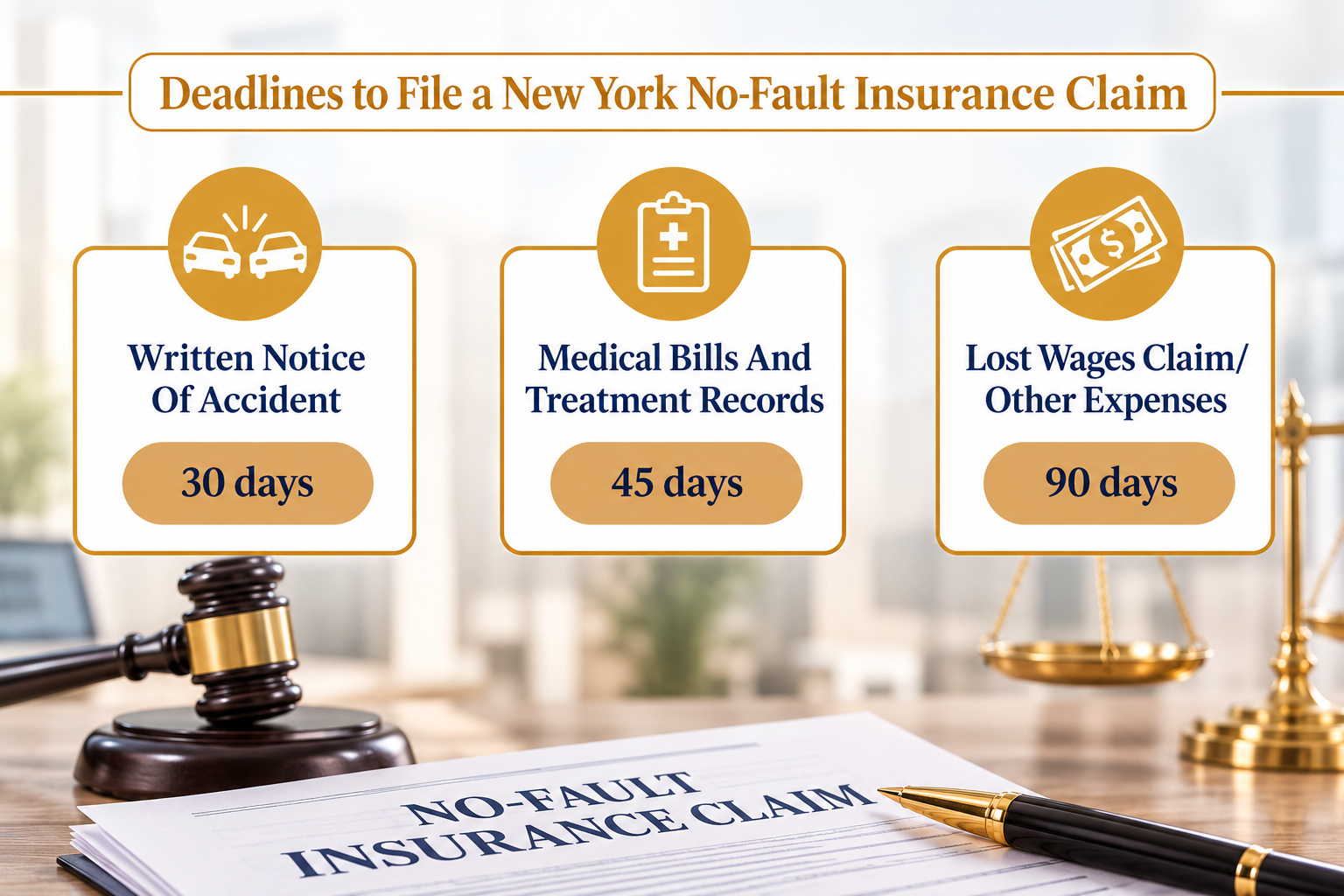
- Medical bills generally must be submitted within 45 days of treatment, while lost-wage claims must be submitted within 90 days of work loss.
- If your injuries meet New York’s serious injury threshold, you may pursue additional compensation for pain and suffering beyond no-fault benefits.
What Are the Steps to File a No-Fault Car Accident Insurance Claim in New York?
Gather all essential documents, such as medical bills, a police report, and proof of lost income to support your claim. Once you’ve assembled everything, submit the complete documents to your insurance provider. Also, make sure to respond promptly to any follow-up requests, such as medical examinations or additional forms.
An organized and timely response will help ensure your claim progresses smoothly without unnecessary delays. Here are the details of the no-fault claim process that will help protect your eligibility for coverage:
1. Notify Your Insurance Company
Under New York law, you must notify your own insurance company after the accident. This written notice should include the crash’s date, location, and circumstances, along with your insurance policy number.
2. Gather Essential Information
Collect contact and insurance policy info of the at-fault driver. Also, gather documentation like witness contacts, photographs, and property damage evidence to build a stronger case. Make sure to request a certified mail copy of the accident report, which you’ll need to file your no-fault insurance claim.
3. File the No-Fault Application (Form NF-2)
Submit the claim form within 30 days, including a detailed account of injuries and expenses related to the accident. Attach written proof of medical bills, doctor visits, medical appointments, and lost earnings from your employer to secure PIP coverage.
After submitting your NF-2 application, you may encounter the following no-fault forms during the claim process:
| Form | Name |
| NF-3 | Verification of Treatment by Attending Physician or Other Provider of Health Service |
| NF-6 | Employer’s Wage Verification Report |
| NF-7 | Verification of Self-Employment |
| NF-10 | Denial of Claim Form |
4. Participate in the Claim Investigation
The insurance company will begin investigating your no-fault claim process. They may conduct interviews, document reviews, and an Independent Medical Examination as permitted under 11 NYCRR 65-1.1 insurance regulation.
5. Claim Decision and Payout
Once the investigation is complete, your insurer will determine eligibility and issue payment based on your insurance policy limits. However, if you’ve sustained a serious injury, you may pursue a separate claim against the at-fault driver to seek compensation beyond no-fault coverage limits.
How to Fill Out a New York State No-Fault Application?
To fill out Form NF-2, provide your personal information, accident details, and vehicle information. You should also provide information regarding your injuries, medical treatment, employment history, and lost wages. Answer all required questions, sign the authorizations, and submit the completed application to the appropriate insurer within 30 days.
The NF-2 form is a three-page application that contains 22 questions and several identification and authorization fields. Here’s a step-by-step process for completing New York form NF-2:
Page 1: Enter Your Personal Information and Accident Details
The first page requests your identifying information, insurance details, and circumstances surrounding the accident. You may have to answer the following questions:
1: Your Name
2: Provide your home and business telephone numbers so the insurance company can contact you.
3: Enter your current residential address, including your street, city or town, and ZIP code.
4: Provide your complete date of birth.
5: Enter your Social Security number as requested on the application.
6: Specify the exact date and approximate time of the accident. Indicate whether it occurred in the morning or evening.
7: Provide the street, city or town, and state where the accident happened.
8: Explain how the collision occurred. Describe the vehicles involved and your position during the accident. Moreover, keep your explanation factual and consistent with the police report.
9: List the injuries you sustained, such as neck pain, back injuries, fractures, or head injuries. Include all accident-related injuries, even if you received treatment after the initial emergency visit.
10: Provide the requested vehicle information, including the owner’s name, make, year, and vehicle type.
11: Answer the questions about your role in the accident, household relationship with the policyholder, and vehicle ownership.
Note: read each sub-question carefully because your answers can help establish which insurance policy may cover your claim.
Page 2: Provide Your Medical Treatment, Employment, and Lost Wage Information
The second page focuses on your medical expenses, healthcare providers, employment status, and other financial losses resulting from the accident. On this page, you have to answer the following questions:
Question 12: Mention whether you received medical treatment. If you answer yes, provide the names and addresses of your doctors and other healthcare providers.
Question 13: Mention whether you received outpatient or inpatient treatment. Include the hospital’s name, address, and admission date, where applicable.
Question 14: Enter the total amount of medical bills incurred up to the application date. Additionally, refer to your hospital statements, medical invoices, and provider bills when calculating the amount.
Question 15: Clarify whether you expect to receive additional medical treatment for your accident-related injuries.
Question 16: Answer whether you were performing work-related duties when the accident occurred. This information helps identify whether workers’ compensation benefits may also apply.
Question 17: State whether your injuries prevented you from working. Also, provide the requested dates and information about your absence and return to work.
Question 18: Report your gross weekly earnings before taxes and deductions. Moreover, provide the requested information about your workdays and daily working hours.
Question 19: Answer yes or no based on whether you were receiving unemployment benefits when the accident happened.
Question 20: List your current and previous employers for the one year before the accident. Include their addresses, your occupations, and the dates you worked for each employer.
Question 21: Mention whether you incurred additional accident-related expenses. If yes, attach an explanation and provide the amounts, along with supporting documentation where available.
Question 22: Answer the questions about other benefits, including New York State disability and workers’ compensation payments. In addition, provide accurate information about any benefits you have received or may qualify for.
Page 3: Complete the Required Signatures and Authorizations
The final page contains 3 sections that allow the insurer to verify your medical treatment, employment information, and financial losses.
- Signature and Date: Review your answers and sign and date the application in the designated section. Your signature confirms that the information you provided is accurate to the best of your knowledge.
- Authorization for Release of Work and Other Loss Information: Provide your printed name, Social Security number, signature, and date. This authorization allows the insurer to request relevant employment and wage information to evaluate your lost earnings claim.
- Authorization for Release of Treatment Information: Enter your printed name, signature, and date. This section authorizes healthcare providers to release relevant medical records, treatment details, and diagnosis information needed to evaluate your claim.
Where Can You Get the New York NF-2 Form?
You can get the New York NF-2 form directly from the New York State Department of Financial Services (DFS) website. You can also download the official Application for Motor Vehicle No-Fault Benefits, print it, and complete the required sections.
However, if you cannot access the DFS website or print the document, contact your insurance company’s claims representative. Ask them to email or mail you a copy. Additionally, you can request help in identifying the correct no-fault insurer if you were a passenger or pedestrian.
Who Is Eligible to File a No-Fault Insurance Claim in New York?
Anyone injured in an auto accident in New York, whether a driver, pedestrian, passenger, or bicyclist, is eligible to file a no-fault insurance claim regardless of who caused the crash. This system allows for prompt payment for medical expenses and lost income without proving fault.
Under New York’s no-fault insurance law, an injured person must file the claim with the insurance company of the vehicle involved in the crash. These no-fault insurance benefits cover medical expenses and lost income up to $50,000 per individual. However, if the injured party does not have their own policy coverage, they may still qualify under the Motor Vehicle Accident Indemnification Corporation. Also, pregnant women may claim that the accident causes the fetus permanent damage. However, it’s essential to act quickly, as New York’s strict deadlines can affect your entire claim.
How Long Do You Have to File an Insurance Claim?
In New York, you have 30 days to file an insurance claim after an accident under the New York no-fault system. Missing this deadline without a reasonable justification may cause the insurance company to deny your claim. It will also risk your eligibility for no-fault benefits such as medical expenses and other out-of-pocket costs.
However, in certain circumstances, the deadline to file a lawsuit may extend up to three years:
- If you’re pursuing further damages beyond no-fault insurance, such as for serious injuries involving a body organ.
- If an uninsured vehicle was involved in the accident, and you’re filing a personal injury lawsuit.
In both cases, it’s essential to act quickly to ensure your legal rights are protected. You can also seek legal guidance from an experienced attorney at Uptown Injury Law, PLLC, to handle complex claim rules and avoid missing deadlines. Whether you’re dealing with an insured vehicle or challenges in securing your benefits, we will help you obtain the compensation you deserve. Schedule your consultation today and get the legal support for your case.
What Documents Can Support Your Auto Accident Insurance Claim?
To support your auto accident insurance claim, gather essential documents like the police report, medical treatment records, repair estimates, photos/videos of the accident scene, and witness statements. This evidence helps verify your injuries and vehicle damage and proves fault, strengthening your case for maximum compensation.
Additionally, supporting documents include your insurance policy, proof of lost wages, and witness statements. You can also keep a journal detailing your pain, treatments, and daily challenges to support your non-economic damages claim. Moreover, if you’ve paid for any services related to the accident, like a rental car, keep the receipts as proof of payment.
What Benefits Are Covered Under New York’s No-Fault Insurance?
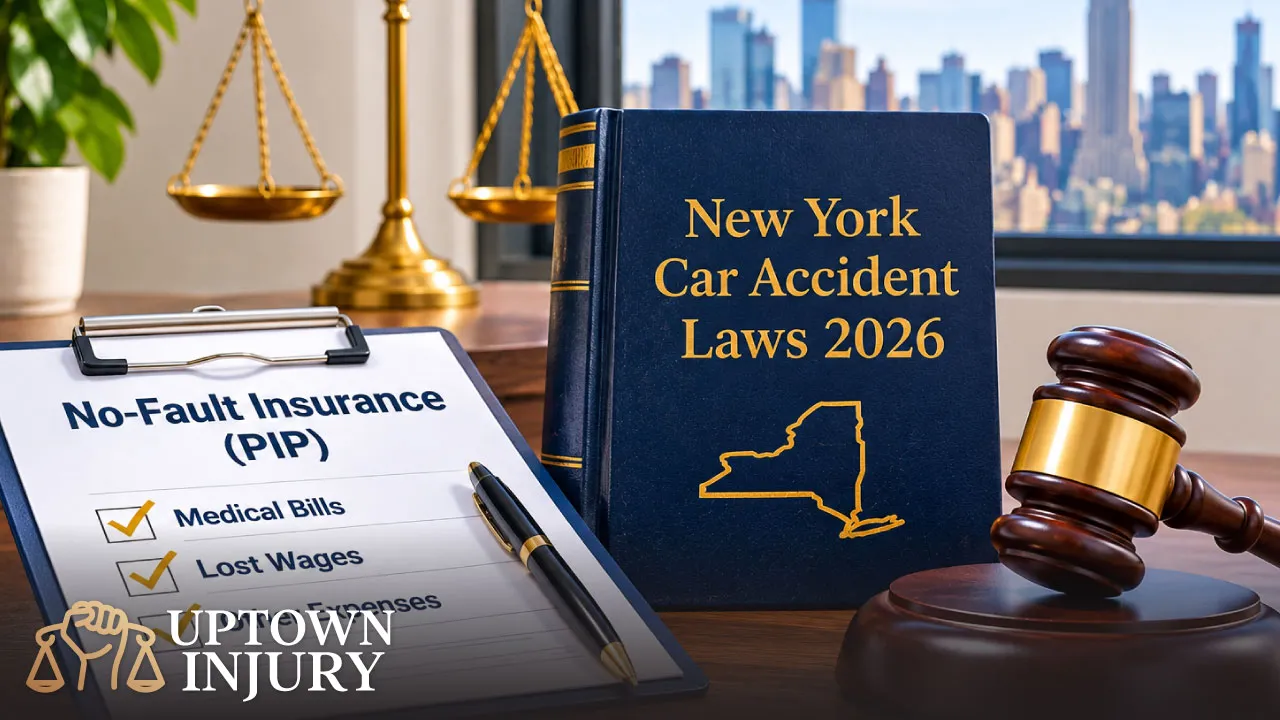
New York no-fault insurance provides coverage for 80% of medical expenses, lost wages, and transportation fare to medical appointments, regardless of who was at fault. This system ensures quick access to necessary care and compensation without the delays of proving liability.
In addition to these, the New York state no-fault system may also pay for:
- Prescription medications
- Diagnostic tests
- Rehabilitation
- Household help
- Up to $2,000 per month in lost income for up to three years
Moreover, it can also provide a $2,000 death benefit to the estate of a deceased victim. But to get these benefits, you must file the claims within 30 days of the accident. At Uptown Injury Law, PLLC, we help injured victims handle New York’s no-fault law system and fight for the maximum benefits they’re entitled to. So, book your consultation today to get legal help for your settlement or denied claims.
Are There Any Exceptions or Exclusions to No-Fault Coverage?
Yes, no-fault insurance excludes coverage for intentional harm, driving under the influence, stolen vehicles, fetus permanent loss, or uninsured drivers. Passengers in out-of-state vehicles and motorcycle riders may also be excluded under New York state law.
However, certain situations fall outside this protection. For instance, if you’re injured while committing a felony or fleeing law enforcement, insurers can deny your car accident claim. Additionally, injuries sustained during high-risk activities, such as racing, or when operating a vehicle without permission, might also be excluded. Therefore, understanding these exceptions is essential to secure your eligibility for no-fault benefits and reduce the risk of claim denial.
Can You Recover Additional Damages Beyond No-Fault Benefits?
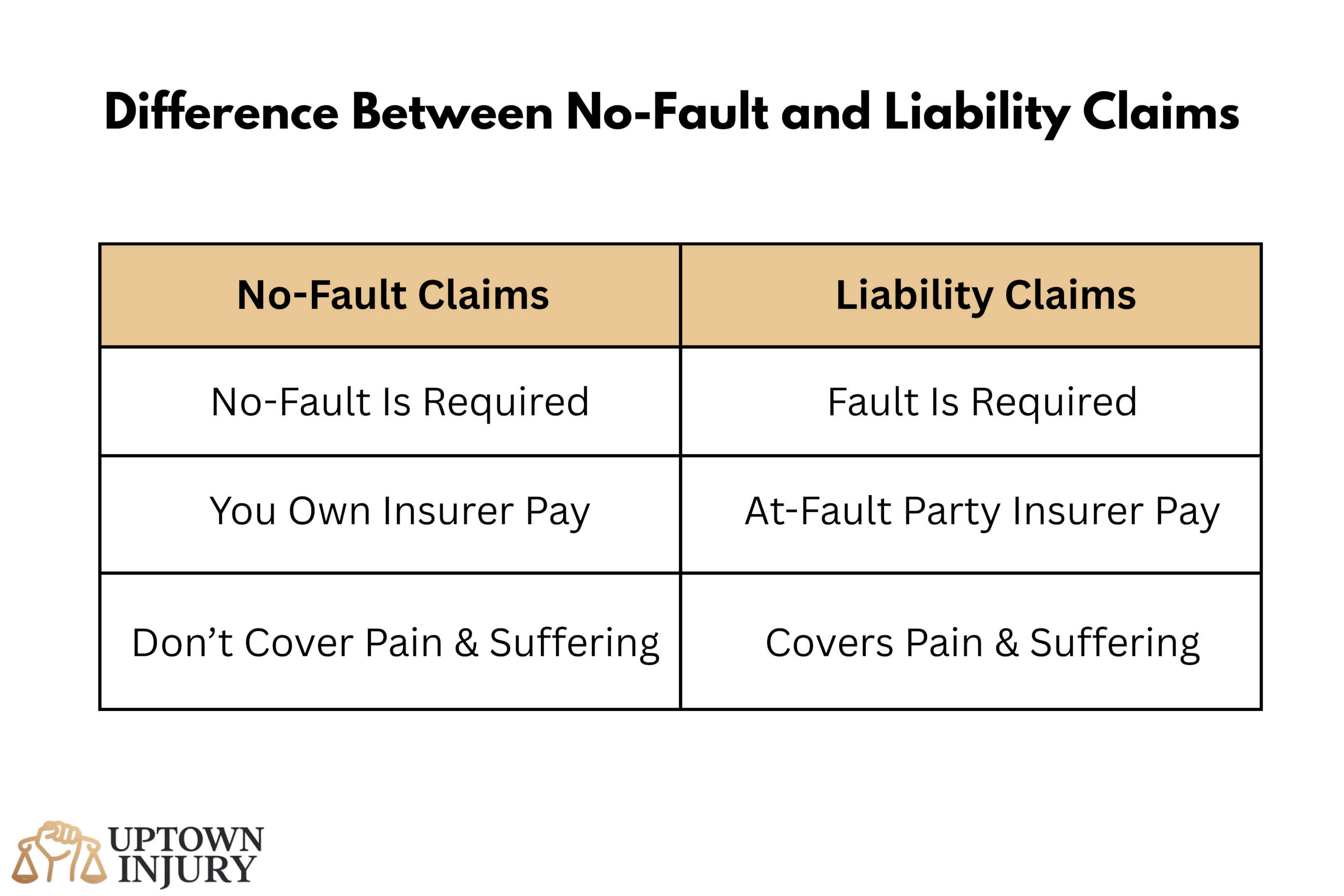
Yes, you can recover additional damages beyond no-fault benefits if your injuries meet New York’s “serious injury” threshold, as defined under Insurance Law § 5102(d). This allows you to file a personal injury lawsuit against the driver to get compensation for pain, emotional distress, and other non-economic losses.
While no-fault insurance covers basic expenses like medical treatment and lost wages, it does not pay for long-term impacts such as diminished quality of life or permanent disabilities. To pursue these damages, your injuries must fall under legally defined categories such as:
- Significant disfigurement
- Bone fractures
- Substantial disability lasting 90 days or more
Once eligibility is established, you can file a personal injury lawsuit to seek fair compensation beyond no-fault benefits. In addition to these expenses, you can get burial expenses for fatalities resulting from accidents.
What Common Mistakes Can Get Your No-Fault Claim Denied?
Missing the 30-day filing deadline and sending the NF-2 form to the wrong insurer can get your no-fault claim denied. Other reasons include providing incomplete information, using an incorrect claim number, missing medical documentation, and failing to attend required medical examinations.
Here’s how these errors can delay your benefits.
1. Missing the Filing Deadline
New York generally requires you to notify the insurer of your accident within 30 days. Moreover, lost-wage claims must be submitted within 90 days of the work loss. Medical bills must also be submitted within 45 days of treatment under no-fault insurance.
3. Leaving Important Fields Blank
Missing information can make it difficult for the insurer to identify your accident and process your application. Therefore, must check these fields carefully:
- Policyholder’s name and insurance information
- Date, time, and location of the accident
- Insurance claim number, if available
- Your personal and contact information
- Details about your injuries and medical treatment
- Employer information, if claiming lost wages
4. Providing Incorrect or Inconsistent Information
Differences between your NF-2 application, police report, medical records, and insurance information can raise questions about your claim. Moreover, New York law also requires a report of the accident if damage exceeds $1,000 or if there are injuries. Review all dates, accident details, injury descriptions, and policy information before submitting the application.
5. Failing to Provide Medical Documentation
You must support your medical expense claims with the required bills, reports, and treatment records. Healthcare providers generally submit medical bills using the NF-3 form. Delayed or missing medical documentation can prevent the insurer from verifying your treatment and evaluating your benefits.
6. Ignoring an Independent Medical Examination (IME)
The insurer may request an independent medical examination to evaluate your injuries and ongoing treatment. But if you fail to attend a properly requested examination without a valid reason, the insurer may have grounds to deny or discontinue benefits.
7. Missing Additional Verification Requests
The insurer may request additional information, including wage verification, employment details, or medical records. For example, NF-6 may be used to verify lost earnings. Ignoring these requests can delay claim processing or result in denial when required proof remains outstanding.
Book a Free Consultation With Uptown Injury Law, PLLC to File a Car Accident Insurance Claim in New York!
Filing a no-fault car accident insurance claim in New York can be a complex and stressful process. Insurance companies often delay payments, dispute the extent of your medical treatment, or offer low settlements to cover your expenses. Moreover, without proper legal guidance, you won’t be able to receive no-fault benefits like wage reimbursement, transportation costs, and other essential services.
At Uptown Injury Law, PLLC, our attorneys take care of the entire process from filing your claim to negotiating with insurers, so you receive the full benefits you’re entitled to under New York law. We work on a contingency fee basis, which means you pay nothing unless we recover compensation for you. Visit our office at 2417 Third Ave, Suite 505, Bronx, New York 10451, or call us at 917-540-8728 to schedule your consultation with our experienced team.
FAQs
Can I Submit the No-Fault Form Online?
Your insurance company determines how you can submit the NF-2 form. Some insurers accept electronic submissions through their websites or claim portals, others require email or mail. Therefore, contact your insurer to confirm the filing methods it accepts and to obtain proof of receipt of your application.
What If I Filed the NF-2 Late?
A late NF-2 filing can put your personal injury protection benefits at risk. You must pay out-of-pocket for hospital treatments. In addition, you will lose up to $2,000 in monthly wage reimbursement. In such cases, no-fault insurance won’t pay $25 per day for necessary expenses.
Do I Need a Police Report to File a No-Fault Claim?
No, you do not need a police report to submit an NF-2 application. You can report the accident and provide other supporting details, such as witness information and medical records. Moreover, you must provide scene photos, videos, and driver contact/insurance information.
Can Pedestrians Claim No‑Fault Insurance Benefits?
Yes, pedestrians injured by a motor vehicle in New York can claim no‑fault insurance benefits. These benefits cover medical expenses, lost wages, and other essential costs, regardless of who was at fault. The claim is usually filed with the vehicle owner’s insurance company, ensuring quick financial relief for necessary treatment and recovery.
What If The Insurance Settlement Offer Is Too Low?
If the insurance settlement offer is too low, you have the right to negotiate or challenge it. To challenge your settlement, you need to provide additional documentation, like medical records or proof of expenses. Moreover, you can also hire an attorney who can advocate on your behalf and help you secure the compensation.
Can I File A Lawsuit Even If I Receive No-Fault Benefits?
Yes, you can file a personal injury lawsuit even if you receive no-fault benefits. If your injuries meet New York’s serious injury threshold, you may pursue additional compensation for emotional distress or other non-economic damages beyond what no-fault covers.
When Should You Not File A No Fault Insurance Claim?
You should avoid filing a no fault insurance claim when damages are minor, below your deductible, or significantly increase your premium rates. If no one is injured and the repair costs are manageable, you can handle the expenses privately. However, it’s essential to determine your policy terms and potential consequences before filing a claim.
Will Filing A Claim Increase My Insurance Premium?
Yes, filing a claim can increase your insurance premium, especially if the insurer determines you were at fault. Insurance companies often adjust rates based on risk evaluation and claim history. Even in a New York no-fault state, frequent claims may impact your rates. Therefore, it’s essential to review your policy and speak with your provider to understand the potential consequences before proceeding.